Treatment and Prevention of Sleep Apnea: Dentistry Plays a Key Role

Royal Oak and Birmingham, MI

Health and wellness are important interests and concerns among the public. The dental profession plays a significant role in this area with the increasing awareness of the relationship between oral and systemic health. The primary responsibility of dental practitioners is to educate and treat patients in a manner that enables them to make the best choices to improve the quality of their lives.

There has been much discussion in the public domain about sleep apnea. This has been brought more into mainstream media the past few years following the local fatal rail accidents that occurred on both the Metro North (2013) and in the Hoboken Terminal (2016). The common detail in each of the accidents is that the engineers of the trains suffered from obstructive sleep apnea (OSA). Excessive daytime sleepiness (EDS), is one of the common comorbid conditions in OSA.

Obstructive sleep apnea occurs when the airway closes off during sleep and breathing ceases until the brain detects a drop in blood oxygen and rise in carbon dioxide levels. This condition triggers the sympathetic nervous system to signal for an arousal, which allows breathing to begin again but disturbs the normal cycles of sleep. This protection is the body’s way to get us to our next breath, not to support an equilibrium where we can be healthy. The sympathetic nervous system stimulation is accompanied by an increase in cortisol levels via the hypothalamic-pituitary axis. Cortisol causes increased stress on the heart and other systems, which also increases levels of inflammation in the body. Heightened cortisol levels increase heart attack and stroke risk, as well as potentially a host of other comorbid conditions including erectile dysfunction, cardiac arrhythmias, hypertension, nocturnal bruxism, attention deficit hyperactivity disorder (ADHD), anxiety and depression.

Dentists are in a unique position to help people of all ages, from screening for airway issues in adult patients, to aiding in the development of normal airways for growing children. Healthy breathing is necessary both in sleep and in our daily awake lives. Focus on airway and breathing must be centered on structure, function, and behavior. The use of functional appliances, in combination with myofunctional therapy, can be used to guide the growth of the maxilla and mandible to create healthy and properly functioning airways that may not develop into OSA. Long before the airway collapses in OSA, a patient goes through a period where it becomes too small, collapses or there is turbulent airflow, making breathing and proper exchange of oxygen and carbon dioxide difficult. It should be the focus of dental professionals to know how to screen for breathing and airway issues in adults and children, as well as how to properly treat pediatric patients so they can experience normal breathing and airway development. It is our responsibility to screen, diagnose and treat airways and breathing. We have access to great technology to assist us in proper diagnosis and management.

The introduction of High Resolution Pulse Oximetry and cone beam CT scans provides us with great tools to assist our patients in screening and diagnosis of airway issues.

Although diagnosis from a physician is necessary in sleep apnea, dentists can be trained to manage structural and function issues. This includes screening and managing these areas of care. We must take the lead in actively creating a network of health care professionals to treat and manage this large and growing public health concern. Dental health professionals should be in the forefront as they are uniquely trained to assess the oral, perioral and facial structures, as well as recognize and treat airway issues before the total collapse of airway obstructive sleep apnea occurs.

There is considerable literature to support the fact that many of the cases and symptoms of ADHD are associated with breathing and airway issues in children. Treatment as well as proper development and function of the airway can often eliminate the symptoms of ADHD. Children must be able to nasal breathe, seal their lips at rest and have proper tongue position and function. Nasal breathing stimulates production of nitric oxide. This chemical is produced in the paranasal sinuses and only during nasal breathing. It is a stimulant to the parasympathetic nervous system, which is essential for proper function of both the cardiovascular and central nervous systems. In addition to being a potent vasodilator, it also has antimicrobial properties. Constant mouth breathing causes inflammation to tonsils, adenoids and oral tissues due to lack of nasal filtration of air. The nose is the filter for the air we breathe as it helps eliminate the passage of viruses, bacteria, fungi and environmental irritants into our airway.

The proper rest position of the tongue from infancy is on the palate as it is the force that leads to proper development of the maxilla.
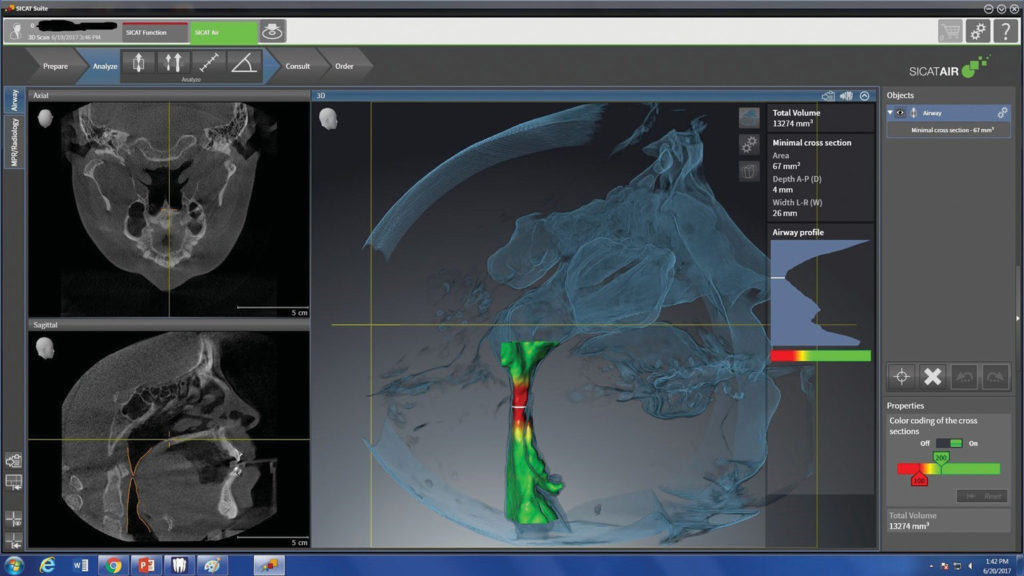
cbct scan hartrick

CBCT for look at sinuses, nasal passages and airway. Keys to upper airway resistance


Constant light forces of the tongue on the palate allow for formation of a wide and properly contoured maxilla. The maxilla is the scaffold for the facial structures along with the width of the nasal passages. Proper development is integral to proper airway formation. The mandible has a higher probability of proper development if the maxillary develops normally.

In clinical screening for airway and breathing, a red flag to normal airway development is the presence of a high palatal vault from tongue positioning. This can result when the tongue rests too low in the mouth which may be due to a tongue tie (ankyloglossia) or enlarged tonsils and adenoids. Open mouth posture, dry mouth, chapped lips, nasal congestion and snoring in children are all additional red flags to proper breathing and airway development.

A network of health professionals who have full understanding of airway and breathing is necessary to help minimize potential diseases and conditions that can result from improper breathing. It is believed that over 40 million Americans suffer from breathing and airway related issues and over 35 million are undiagnosed.

The network of health professionals that can help our community of patients with breathing and airway issues include the following:

  • Restorative dentists
  • Pediatric dentists
  • Pediatric ENTs
  • Adult ENTs
  • Myofunctional therapists
  • Respiratory physiologists
  • Pediatricians
  • Sleep physicians
  • Primary care physicians
  • Orthodontists
  • Craniosacral therapists

The goal of these networks and dental practices is to have an algorithm for the diagnosis, control and desired resolution of breathing and airway issues for patients. This is a multidisciplinary approach that involves individualized care. In many cases, the restorative dentist and pediatric dentist are in the unique positions of being the first health care professionals to see and evaluate patients for breathing and airway related issues. The message for the dental profession in 2017 is the fact that this health problem goes way beyond treating sleep apnea. This is a health concern whose vast ramifications are just now becoming well understood.

It is a life changing issue for many patients in our communities. The dental profession has the ability to make a great impact on the health and wellness of our communities and our country.

Dr. Steven Acker has been in clinical practice in Staten Island at his practice, NY Elite Dental of Staten Island, since 1989. He has been an attending at Brookdale University Hospital Medical Center since 1982. He is also a clinical instructor at the Kois Center.

Dr. Nancy Hartrick is in clinical practice at Hartrick Family Dentistry in Royal Oak, MI. She is also a clinical instructor at the Kois Center.


Posted in News and Updates

The Connection Between Lack of Sleep and Diabetes

connection between lack of sleep and diabetes

connection between lack of sleep and diabetesRoyal Oak and Birmingham, MI

Have trouble sleeping? The consequences can go far beyond just feeling tired during the day.

Recent research has found a potential link between insomnia and an increased risk of developing type-2 diabetes.

According to Sherl Westlund, executive director of Diabetes Research WA, a Harvard study released this year found that women who experienced a number of sleep concerns had a significantly higher risk of becoming diabetics.

More than 133,000 women were evaluated as part of the study, with the range of sleep difficulties cited including problems staying asleep, frequent snoring, sleeping less than six hours, sleep apnea or working on a rotating shift schedule. Females dealing with any combination of these issues were up to four times as likely to develop type-2 diabetes within ten years.

The research was similarly dire for teenagers. For teens that sleep less than eight hours a night, there is an increased likelihood of developing fat around the midsection and insulin resistance, both major precursors to becoming diabetic.

The research reinforces the medical consensus that quality sleep is one of the fundamental cornerstones to maintaining overall good health.

Inadequate sleep in all forms can be harmful. This is particularly the case for sleep apnea, a sleep breathing disorder that develops when the airway becomes blocked. These blockages can happen as many as 30 times a night, disrupting the ability to sleep and increasing the risk of other serious health problems—including diabetes—such as high blood pressure, cardiac disease, and depression.

CPAP no more

In the past, the CPAP (continuous positive airflow pressure) machine was known as the “gold standard” for treating obstructive sleep apnea. The CPAP works by the patient wearing a mask over their nose while they sleep. The mask is hooked up to a machine that is plugged in, and it works by forcing air into the airway while sleeping. Although effective, CPAP users are typically noncompliant and discontinue its use after only a few months.

There are many reported complaints with the CPAP. It is uncomfortable and restricts movement during sleep. Since the mask is worn over the nose, held in place by a head strap, the patient is unable to roll over and sleep on their side comfortably. Also, the machine is rather noisy, and not only can disrupt the sleep of the person using the machine but the sleep of anyone else in the room as well. Traveling with the CPAP can be cumbersome, making overnight stays inconvenient.

Oral appliance therapy for your sleep apnea

Thankfully, advancements in modern dentistry have brought us oral appliance therapy. This is a simple, yet effective method of treating sleep apnea. Oral appliances are custom made and are adjustable to fit the changing needs of your sleep apnea. When worn, the oral appliance helps by repositioning the lower jaw, which in turn facilitates an open airway. Not only are oral appliances comfortable, they are convenient to travel with, and will not disrupt anyone else’s sleep that is in the bedroom with you.

 If you suffer from sleep deprivation, and sleep apnea is the cause, the problem will not go away on its own. A qualified sleep apnea dentist, such Hartrick Dentistry, should evaluate you. Contact our office at (248) 549-0950 to schedule an appointment.

Hartrick Dentistry is proud to serve the oral health needs of patients in the areas of Royal Oak and Birmingham, Michigan.

Posted in Health

Do I Have Sleep Apnea? Here’s how to Tell

how to tell if you have sleep apnea

how to tell if you have sleep apneaRoyal Oak and Birmingham, MI

If you suffer from chronic fatigue, your sleep problems could be stemming from sleep apnea, a disorder in which the airway collapses during sleep, resulting in snoring or gasping for air.

Ultimately, this sleep breathing disorder affects your health, increasing your risk of heart disease, stroke, diabetes, and more, although snoring and fatigue are one of the first warning signs you may have this sleep-breathing disorder.

To protect your health, and essentially save your life, check out these common indicators of sleep apnea.

One of the most telltale signs of sleep apnea is frequent, loud snoring. You may not even be aware that you snore unless someone sleeps with you, and reports the behavior to you. The reason snoring occurs in sleep apnea sufferers is the blockage of the airway that restricts airflow. Sleep apnea causes the brain to slightly awaken out of a deep sleep as if the body were choking, hence the gasping or snoring sounds.

If your snoring only occurs during bouts of sickness, you probably have nothing to worry about. Although snoring is extremely common among sleep apnea sufferers, it is not the only symptom to look out for when determining if you have sleep apnea.

Fatigue is another symptom associated with sleep apnea. Since the body is constantly being awakened during sleep, it is not getting the rest that it needs to thrive and feel rejuvenated. Sleep apnea sufferers are at a higher risk of being involved in an accident because of their frequent fatigue.

Fatigue can be as mild as feeling drained by mid-day, to totally interrupting your life, and leading to depression. If you feel as though you get enough hours of sleep each night, yet still feel tired all of the time, you could have sleep apnea without even realizing it.

Memory problems also occur in a person with sleep apnea. If you find that you have difficulty remembering simple things like appointments, or meetings at work, your kid’s sporting events or the like, your memory issues could be related to sleep apnea.

Sleep apnea sufferers also report moodiness or being overly sensitive to borderline depressed. It is no wonder these feelings occur since the body is not resting as well as it should. If you find that your emotions seem to be off the charts and unusual for you, consider a sleep evaluation by the dentist.

For adults, men specifically, sleep apnea also can impact libido, affecting intimacy in a relationship. Research indicates that men, who do not get a restful night’s sleep, often result in lower levels of testosterone, a hormone directly related to libido.

If you believe that you suffer from sleep apnea, get a sleep evaluation right away, it could save your life! Treatment for your sleep apnea could be easier than you realize with a custom made oral appliance. To learn more, please call the office of Hartrick Dentistry at (248) 549-0950 and schedule an evaluation today.

Hartrick Dentistry is proud to serve the oral health needs of patients in the areas of Royal Oak and Birmingham, Michigan.

Posted in Sleep Apnea

A Healthier Diet Means a Healthier Smile

healthier diet

healthier dietRoyal Oak and Birmingham, MI

If you want a healthier smile, watch what you eat. For many, it is not a surprise that foods and snacks loaded with sugar cause tooth decay, but there are many snack options out there that are not as healthy as they seem. Here are some foods to avoid if you want to maintain a healthier smile.

Skip the mints and hard candies that contain sugar. Instead, chew on sugarless gum that contains Xylitol, a sugar-free substitute that tastes good, and reduces your chance of developing tooth decay. Not to mention, your waistline may thank you, too!

Ice is for your drink, not your teeth. As tempting as it may seem, avoid chomping on ice as it can chip or break your teeth or even cause damaging to existing dental work. Although it may not seem like a big deal at first, chewing on ice can cause unnoticeable fractures in your teeth that eventually become larger, and lead to oral health concerns.

Limit your citrus intake, even if it is just lemon water. Citrus, although refreshing, can cause dental enamel erosion. When this occurs, teeth become sensitive, and more susceptible to developing cavities. If you must consume foods or beverages containing citrus, do so in moderation, and be sure to rinse your mouth out with plain water afterward or brush if you can.

What is in your coffee could be harmful to your teeth. Millions of people consume coffee every day, but many enjoy their morning cup of joe by adding sugary creamers and sugar. So, although coffee itself is not all that harmful to your teeth, that added sugar is. Be sure you drink plenty of plain water while also enjoying your coffee, and be mindful of how much sugar you are adding.

Sticky foods that aren’t always healthy include dried fruit. Although raisins and the like may seem healthier, after all, it is fruit, but it still sticks to your teeth and hides in the deep grooves of teeth where cavities usually start. If you consume these snacks, be sure to brush afterward.

Think that crunchy foods are a safer alternative? Think again! Those tasty crackers or potato chips are almost just as bad as the sticky dried fruits. The reason is that these salty snacks are basically carbohydrates, which break down into sugar once consumed. They are basically cookies with salt on them.

Skip the soda and choose water instead. Sipping on sugary beverages throughout the day means that your teeth are constantly being bathed in sugar. Although an occasional sweet drink will not totally wreck your oral health, doing so consistently will cause tooth decay, or worse. So, if you must drink soda every once in a while, just be sure to brush afterward or at least rinse your mouth with water.

Limit your alcohol intake simply because alcohol limits salvia production. Our mouths naturally produce saliva as means to rinse away bacteria and food particles that accumulate in our mouths. Without it, bacteria will easily multiply and begin affecting oral health. Plus, excessive consumption of alcohol has been linked to oral cancer.

Trade in your sports drinks for water. There is a common misconception that sports drinks are “healthy.” Although they help to hydrate and replenish electrolytes that our bodies sweat out during intense exercising or sports, these drinks are also loaded with sugar and contain acids that erode dental enamel. Instead of grabbing a sports drink to rehydrate, consider water or even coconut water instead. If you need the added electrolytes, keep some fresh fruit nearby that you can snack on after your workout.

For more information about oral health or to schedule an appointment, contact the office of Hartrick Dentistry at (248) 549-0950.

Hartrick Dentistry is proud to serve the oral health needs of patients in the areas of Royal Oak and Birmingham, Michigan.

Posted in General Dentistry

The Health Benefits of Smiling

health benefit of smiling

health benefit of smilingRoyal Oak and Birmingham, MI

A smile is universal in all languages. It conveys an emotion that is understood by others, yet many people attempt to hide their smile or don’t smile at all because they are embarrassed about how they look. There are many proven health benefits to smiling, so if you shy away from this common form of body language, don’t! At Hartrick Dentistry, we can transform any smile, which makes for a happier, and healthier, body.

Here are five health advantages of smiling.

Lowers blood pressure

Studies have shown that smiling helps lower blood pressure. If you need a little extra Zen in your life, just smile! It can actually help lift your mood, not to mention the mood of those around you.

Cure the common cold

Sounds a little quirky, but research states that smiling helps the body produce more antibodies and white blood cells, which is what helps the immune system ward off infections such as the common cold, so make smiling part of your daily vitamin intake ritual.

Live longer

Research conducted by the University of Illinois shows that people who smile live longer. In fact, they live, on average, 10 years longer than those who frown more often.

A natural pick-me-up

You know that feeling you get when you drink a cup (or two or three!) of coffee? That is your body releasing endorphins and melatonin, hormones that make you feel good and relieve stress. Bet you did not know that smiling could give you that same pick-me-up feeling without the need for a double shot of espresso!

Healthy relationship

Researchers at DePauw University in Indiana found that people who smile often are more likely to have a healthier relationship or marriage. It can be hard to be mad at your significant other when you are both smiling at each other!

With the proven health benefits of smiling, what have you got to lose? If you tend to hide your smile or not smile at all because you are embarrassed about your smile, then contact Hartrick Dentistry today by calling (248) 549-0950 to schedule a consultation and learn how cosmetic dentistry can change your life.

Hartrick Dentistry serves patients in Royal Oak and Birmingham, Michigan.

Posted in Health

Why Am I Always Getting Sick

why am i always getting sick

why am i always getting sickRoyal Oak and Birmingham, MI

The hectic nature of daily life today means that sleep deprivation is becoming increasingly widespread. Scientific studies have shown a link between not getting enough rest or being sleep deprived, and having an increased risk factor of developing serious ailments such as heart disease or diabetes.

Did you know that lack of sleep also might affect your immune system? A recent study found that, when a person does not get the recommended amount of sleep, it triggered an inflammatory response in the immune system. These rises in inflammation can be harmful, especially when chronic. Inflammation also can trigger heart disease.

Another study of the immune system compared two groups of healthy people—one that slept poorly for a week, and one that slept well—and found the group that slept poorly had more immune system activity. This activity triggered more incidents of allergies and asthma.

Good sleep allows the body and mind to restore. This also applies to the metabolic and immune systems. The longer a person is denied proper rest, the higher the risk of developing a chronic disease.

One potential disruption to the sleep cycle and proper rest is a sleep breathing disorder, such as obstructive sleep apnea, which occurs when the muscles in the throat relax, causing soft tissue to collapse and block the airway. These obstructions cut off the air supply to the body, disrupting the natural cycle of sleep. A total blockage of the airway can rouse you from sleep because your body and brain react as if you are choking. Severe cases of sleep apnea see these blockages occur hundreds of times per night. These breathing episodes are what causes snoring.

At Hartrick Dentistry, we have the training and experience to diagnose cases of sleep apnea, and also treat the disorder through the use of oral appliance therapy, which repositions the jaw in an ideal forward alignment to help maintain an open airway during sleep.

Have you been diagnosed with sleep apnea, and find yourself hesitant to undergo therapy such as the use of a CPAP machine? Do you or a member of your family snore loudly or suffer from excessive fatigue throughout the day? If the answer to either question is yes, then call our office at (248) 549-0950 to schedule a consultation.

Hartrick Dentistry is proud to serve the oral health needs of patients in the areas of Royal Oak and Birmingham, Michigan.

Posted in Health

Tips for a Cavity-Free Dental Visit for Your Kids

tips for cavity free dental visit

tips for cavity free dental visitRoyal Oak and Birmingham, MI

Good oral hygiene habits should be on the priority list for everyone, including children and babies. Unfortunately, nearly 42% of children ages 2 to 11 develop cavities in their teeth, even though tooth decay is preventable. Follow these tips so that your kids will have a cavity-free dental visit.

Oral care for babies

Parents often neglect their baby’s oral health, assuming gums do not need oral care. That could not be farther from the truth! Even baby’s gums need to be thoroughly cleaned by wiping them with a moist cloth after each feeding. Wiping your baby’s gums will remove bacteria and residue from their mouth.

Skip the bottle

At bedtime avoid allowing your baby to go to bed with a bottle filled with milk, juice, or breast milk. This would allow your child’s gums and teeth to be continuously coated in sugar, which is the main culprit of tooth decay. Fill the bottle with water instead, if your baby insists on having a bottle to help get to sleep.

Eat healthy

Getting your child to eat a healthy diet of fresh fruits and vegetables may be easier said than done. But, resist the urge to allow your child to snack on crackers, chips, and sweet treats throughout the day. Of course, the occasional treat will be had, that’s inevitable, in those cases just be sure that your child brushes his or her teeth immediately afterward.

Good oral hygiene

Children need good oral hygiene, even though they will eventually lose their baby teeth, which serve as an important part of their oral health. Children should brush their teeth twice a day and floss daily, just like adults. We recommend that you monitor your child’s oral hygiene habits until they can brush good enough on their own. Remember routine dental visits and exams, which should begin as soon as their first tooth erupts or by their first birthday.

For more information about children’s oral care, call the office of Hartrick Dentistry at (248) 549-0950 to schedule an evaluation today.

Hartrick Dentistry is proud to serve the oral health needs of patients in the areas of Royal Oak and Birmingham, Michigan.

Posted in Pediatric

Do you want a new smile? Answer these questions first.

smile makeovers

smile makeoversRoyal Oak and Birmingham, MI

Most of us are just not lucky enough to be born with a perfect smile. Thankfully, at Hartrick Dentistry, we offer smile makeovers to give you a smile that you deserve.

What is a smile makeover?

A smile makeover is a treatment that can completely change how you look and how you feel about yourself. Usually, smile makeovers consist of multiple cosmetic dentistry procedures to correct a variety of dental concerns. Every smile makeover is custom designed to fit your specific dental needs.

Here are some questions to ask yourself if you are considering a smile makeover.

What makes you unhappy about your smile?

When answering this question, get specific. Do you have crooked, misshapen, or discolored teeth? Maybe you have a “gummy smile” or your teeth appear too short or too long. Be sure to discuss these concerns with the dentist to help customize your treatment plan.

What type of smile are you hoping to achieve?

People sometimes desire a “Hollywood Smile” with dazzling white teeth that are perfectly shaped and straight. Other times, people just have minor dental issues they wish to correct. Whichever end of the spectrum you land, be sure to make it apparent to the dentist. Since a smile makeover is individualized for each patient, yours may only consist of one or two procedures while others may need repeat visits to receive multiple treatments.

How am I going to afford my smile makeover?

Your treatment plan will outline the cost of your smile makeover. You may wish to spread out your treatments and pay as you go, or take advantage of special interest-free financing. If paying for your treatment is a concern, discuss this with the dentist to determine which method of payment is best for you.

To get started on your smile makeover, contact Hartrick Dentistry today at (248) 549-0950. We welcome patients of Royal Oak and Birmingham, Michigan.

Posted in Cosmetic Dentistry

Is Flossing Every Day That Important?

is flossing important

is flossing importantRoyal Oak and Birmingham, MI

The short answer, YES! Let’s put it this way; your overall health relies on the state of your oral health. By ignoring even seemingly insignificant details such as flossing, you are increasing your risk of developing serious health-related diseases, all by skipping this less than 2-minute step!

Flossing is one of the most important actions you can take to guarding the health of your mouth and body. Many studies have linked oral bacterium to an increased risk of cancers, diabetes, premature births, low birth weight, heart disease, strokes, and even erectile dysfunction. Still, with these facts nearly one-third of adults do not floss regularly.

Look at some of these astonishing facts about oral care in America.

  • 4 percent of adults in the U.S., ages 30 and over, NEVER floss
  • 3 percent floss occasionally
  • 3 percent floss daily
  • Men tend to floss more than women
  • Low-income individuals are less likely to floss as compared to those with a high income

The act of flossing removes the buildup of bacteria and food particles that hide between your teeth and around your gums. These areas simply cannot be thoroughly cleaned by brushing alone. When this bacterium is not removed on a regular basis, it turns into plaque, which eventually hardens and becomes what is known as tartar. This hard substance can only be removed by a professional dental cleaning.

So what is the big deal with tartar? It leads to tooth decay, gum disease, and tooth loss,ot to mention bad breath! Gum disease begins by causing red, swollen gums that bleed easily. This means your mouth has an infection, which can cause health problems throughout your body. If you already don’t like the sound of this, then start flossing!

To properly remove this bacterium from between your teeth and gums, follow these steps.

  • Take the floss, wrap it around your index fingers and make it taught
  • Using an up and down motion, scrub the sides of your teeth with the floss
  • To clean around the gum line, follow the shape of your gums, which for a “C”
  • Don’t just pop the floss in and then right back out, you will still be leaving bacteria behind

To learn more about proper oral care, contact Hartrick Dentistry today at (248) 549-0950.

Hartrick Dentistry is proud to serve the oral health needs of patients in the areas of Royal Oak and Birmingham, MI.

Posted in Health

Are You Allergic to Your Fillings

can metal fillings be replaced

can metal fillings be replacedRoyal Oak and Birmingham, MI

Did you know that more than 30 percent of the population has some sort of metal allergy? Considering that metal has been used to make fillings and other dental material for decades, this obviously can cause a potentially serious problem for a significant percentage of the populace.

Nickel is the most common metal allergy, and nickel also is regularly used in dental fillings and crowns. Metal allergies are more prevalent among women than men, and present themselves as either a skin rash or contact dermatitis. Other metals used in the composition of dental work include cobalt, platinum, palladium, and beryllium. Each of these metals also can provoke an allergic reaction, or interact with nickel to create a rash.

An allergic reaction is just one of the reasons why dental practices at the forefront of the field are moving towards maintaining a metal-free environment. Much metal dental work also contains mercury. The composition of amalgam fillings, which you might have heard referred to as “silver fillings,” can consist of up to 50 percent mercury. These fillings also release mercury vapors in your mouth whenever you eat, drink or otherwise stimulate the filled teeth. This mercury exposure can be toxic; children are particularly vulnerable to impairments of the psychological, neurological or immunological varieties.

Hartrick Dentistry offers restorative dental treatments that are free of mercury, or entirely metal-free for patients with a metal sensitivity or who have been diagnosed with a metal allergy. We can also remove your old metal dental work, and replace it with a safer alternative that is tooth colored.

To learn more about our metal-free options or to schedule an appointment, call our office at (248) 549-0950. A member of our staff will be happy to answer any questions that you might have.

Hartrick Dentistry is proud to serve the oral health needs of patients in the areas of Royal Oak and Birmingham, Michigan.

Posted in Health